Case studies

The first real loops.

Before Via is offered to anyone, it runs brands its founders own. These are the first two, recorded from the platform's own data. Names are withheld here; no order numbers, amounts or customer details are published.

Store one

A home décor brand: framed prints, Arabic and English storefront

Home page of a home décor storefront on Via showing three framed prints in a carousel
Home page, desktop
Empty cart page of the same storefront on a phone
Cart, phone

On 22 September 2026 this brand closed its first complete real loop on Via: a customer order placed on its own storefront, paid by InstaPay transfer and confirmed by an operator in Via Admin against the bank reference, handed to a courier with a waybill, picked up, out for delivery and delivered, with the customer emailed at each step by Via.

What ran on Via

  • Storefront catalog, gallery collections, favourites and checkout on the brand's domain
  • Governorate delivery fees at checkout
  • InstaPay evidence from the customer, confirmation by the operator in Payments › Verification
  • Manual courier shipment and the three delivery steps
  • Order, payment and shipment emails, all sent by Via

What changed in Via because of it

  • Operator actions became first-class Admin buttons instead of database calls
  • Delivery fees per governorate got an editor so gaps are visible before launch
  • Card payments stayed on the test merchant until the live switch is rehearsed

Store two

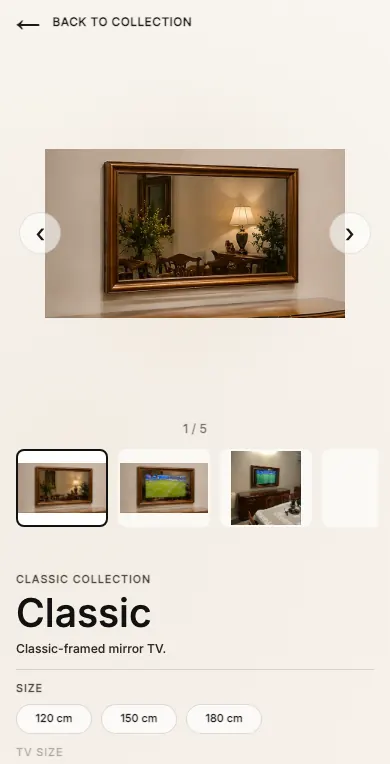
A resin home décor brand: made-to-order pieces with options

Home page of a resin home décor storefront on Via showing a backlit framed mirror above a dresser
Home page, desktop
Product page of the same storefront on a phone with size and frame options
Product, phone

The same day, this brand repeated the loop on the same core with no platform change: a real customer InstaPay order was confirmed, shipped by manual courier, delivered, marked fulfilled automatically on delivery, and every customer email was sent by Via. Its orders often start on Instagram or WhatsApp, so social order intake and quotes are part of its daily flow.

Why it matters

A second brand, with its own storefront, design and product model, ran on Via without a migration, a deploy or a secret change. That is the point of a shared core: the second store is configuration, not a project.

What ran on Via

  • Configurable products and quotation requests
  • Social order intake with payment-link handoff
  • Payment confirmation in Admin, courier steps, automatic fulfilment on delivery
  • Six customer emails, end to end

What we did not do

  • No number on this page is a sales figure. Both loops were single real orders that proved the platform end to end.
  • No customer data, order number or amount is published.
  • We did not switch card payments to the live merchant for these loops; that step has its own rehearsal.

Your brand could be store three.

Tell us what you sell. We will show you the same loop on your products before you decide.